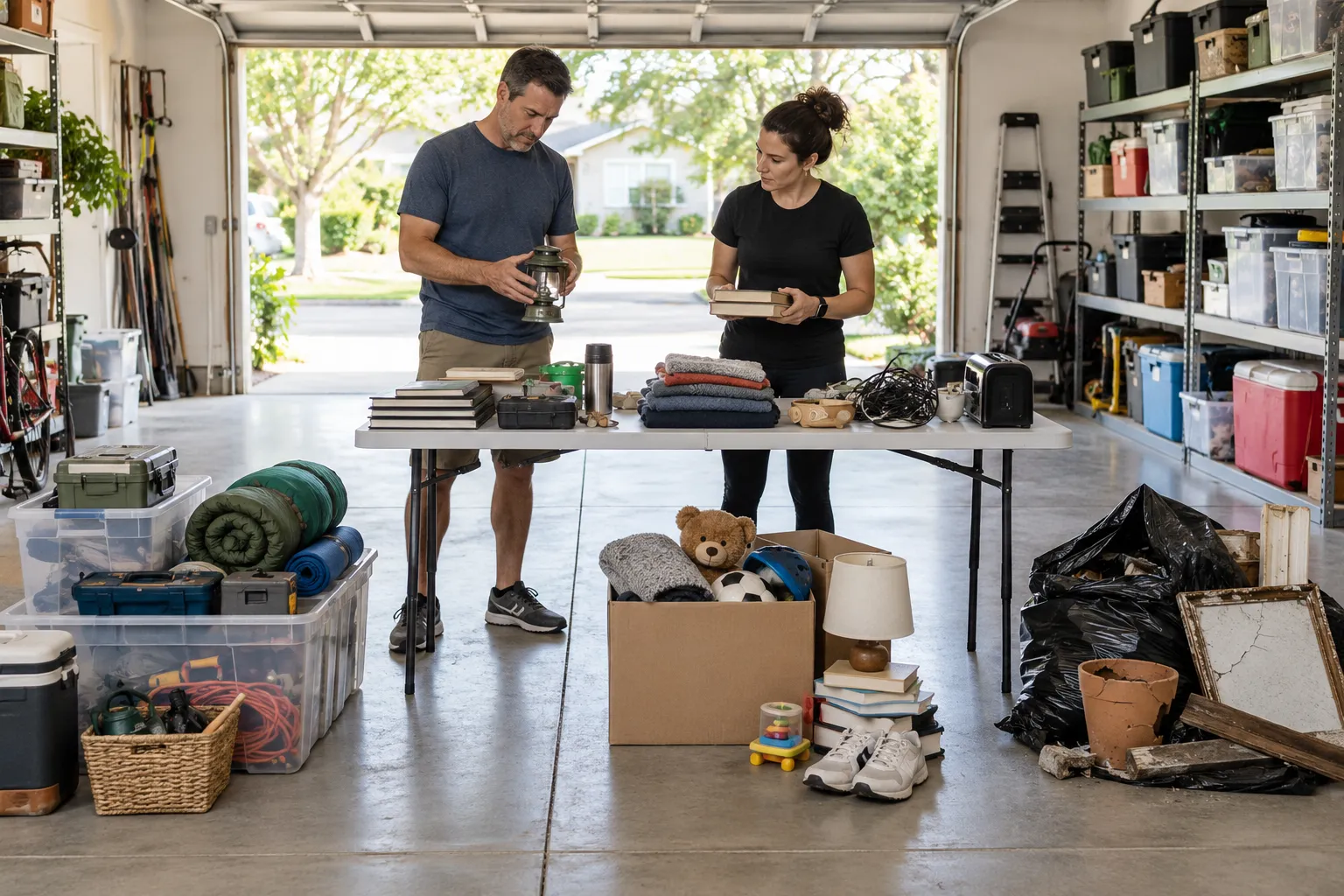
The safest place to start is not with the heaviest item. Start by protecting anything that must not leave. Move records, photos, keys, tools you use, and family keepsakes into a closed keep zone before a removal pile begins.
Set four zones that cannot overlap
Use keep, remove, decide later, and special handling. The fourth zone matters in a garage because paint, solvents, fuel, pesticides, batteries, and pressurized cylinders do not belong in an ordinary junk load. The EPA advises keeping hazardous products in their original containers, reading their labels, and never mixing leftovers.
Work one shelf or floor bay at a time
A full-garage empty-out can create a second problem in the driveway. A tighter sequence keeps decisions visible: finish one shelf, close each keep bin, move approved items to the removal side, then continue. Stop if weather or traffic would make an outdoor sorting area unsafe.
Make the removal boundary obvious
Do not rely on verbal memory once several people are moving items. Keep approved removal items together and physically separate from the keep zone. If a box is not opened or approved, it stays.
Give the estimate the facts that change the job
- About how much floor and shelf area the remove pile occupies
- The largest and heaviest pieces
- Any stairs, gates, long carries, or sloped driveways
- Whether loose material is bagged or boxed
- Any special-handling items that have been isolated
You do not need to make every small item perfect before asking for help. You do need a clear line between what stays, what goes, and what cannot enter an ordinary load.
Sources and next steps
Material-handling guidance was checked against the U.S. EPA household hazardous waste guidance, EPA appliance disposal guidance, and applicable municipal pages linked from the service-area directory.
For help with the physical removal, review garage decluttering or prepare the details for an on-site estimate.