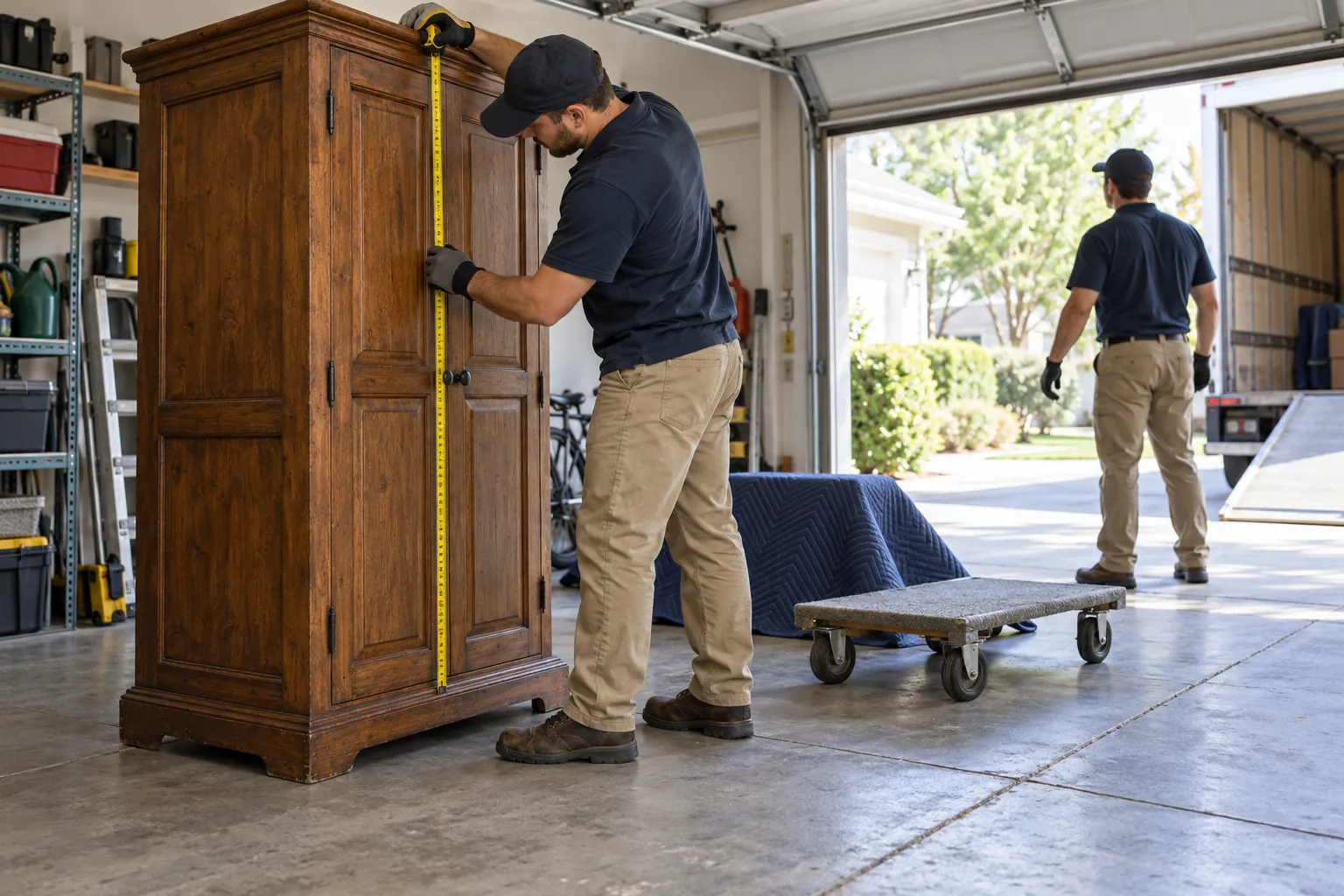
Measure the furniture at its widest, tallest, and deepest points, then measure the narrowest part of the exit path. A piece that fits the garage door can still fail at a side door, gate, turn, stair landing, or trailer approach.
Use a route sheet, not one doorway number
Record the item dimensions, garage opening, any interior doorway, gate width, stair width, ceiling or handrail clearance, and the tightest turn. Note removable feet, shelves, glass, or doors, but do not disassemble the piece until you know that work is appropriate.
Photograph the constraints
One photo of the item and one of the route often explains more than a long description. Include the floor, threshold, and nearest fixed obstacle. Avoid sending photos that contain personal records, license plates, or people who did not agree to be photographed.
Leave lifting to a suitable crew
Bulky furniture can shift, flex, or lose a loose part during a carry. Do not test a difficult route by forcing the item through it. Protect the route, remove loose contents, and tell the pickup team about glass, damage, or weak joints before lifting starts.
Good measurements do not produce a fixed price by themselves, but they help identify the right crew, equipment, and amount of disassembly before arrival.
Sources and next steps
Material-handling guidance was checked against the U.S. EPA household hazardous waste guidance, EPA appliance disposal guidance, and applicable municipal pages linked from the service-area directory.
For help with the physical removal, review garage furniture removal or prepare the details for an on-site estimate.