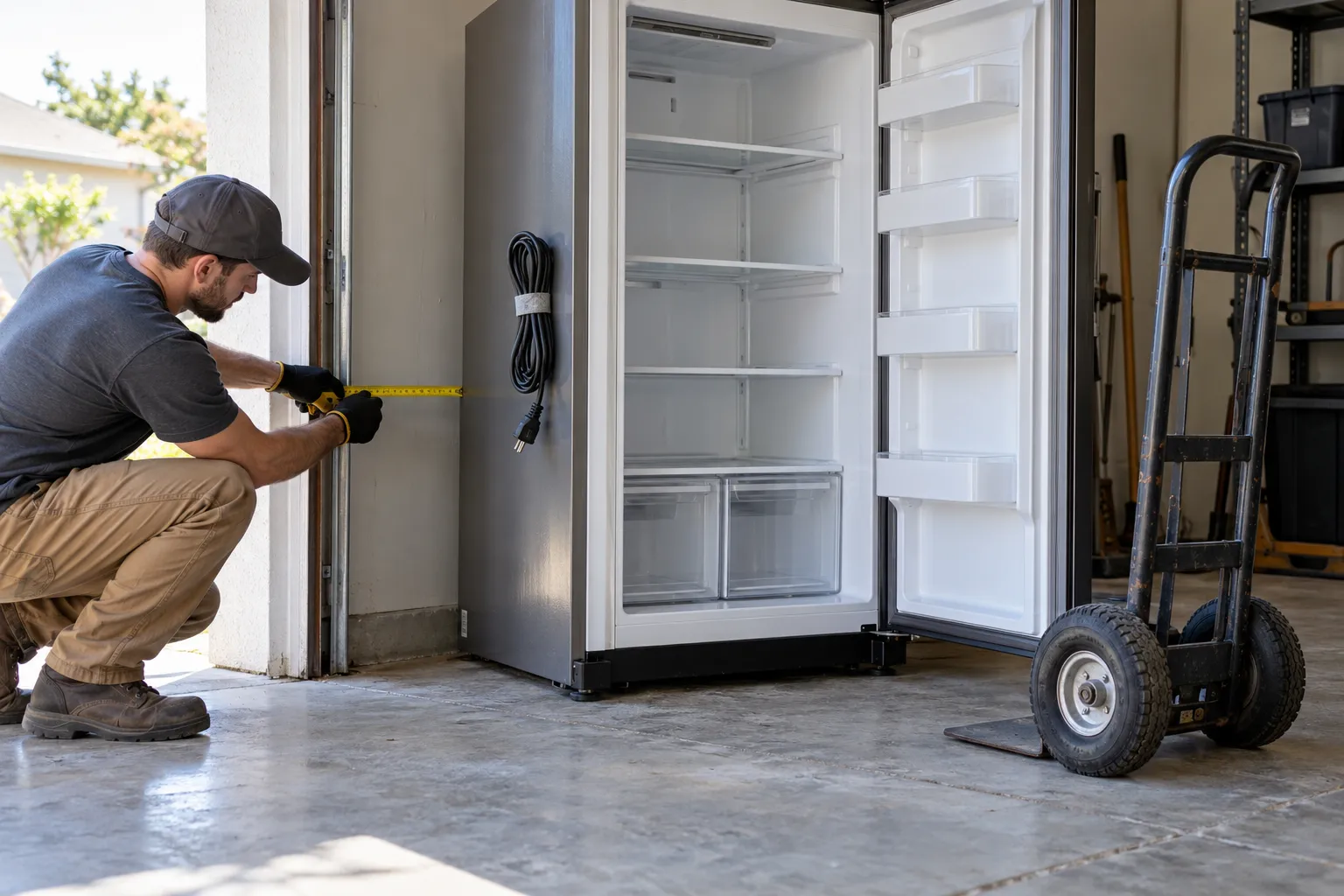
Empty the refrigerator, disconnect it from power, and let it dry before pickup. Secure loose shelves and the cord, but do not damage the sealed refrigerant system or vent refrigerant.
Start with food, water, and loose parts
Remove all food and ice. After the unit is unplugged, follow the manufacturer’s guidance for defrosting. Wipe out standing water and secure shelves, drawers, and the power cord so they cannot shift into the carrying path.
Keep the refrigerant system intact
The EPA explains that refrigerators and freezers can contain refrigerant, compressor oil, and other components that need proper handling. The final disposer is responsible for refrigerant recovery. A homeowner should not cut lines or release refrigerant to make the appliance easier to move.
Check the route and the destination
- Measure the refrigerator and the narrowest opening.
- Clear floor clutter between the appliance and the load point.
- Tell the provider about steps, slopes, soft ground, or a long carry.
- Ask how the unit will be routed for compliant handling.
City of Knoxville guidance says refrigerant appliances are not eligible for bulky pickup unless the coolant has been professionally drained and the item tagged; the city facility can accept them for qualified handling. Rules differ by jurisdiction, so confirm the option for the property.
A pickup request should name the appliance, whether it is empty and unplugged, and whether refrigerant is still present. That gives the provider enough information to confirm scope instead of discovering a regulated item at the door.
Sources and next steps
Material-handling guidance was checked against the U.S. EPA household hazardous waste guidance, EPA appliance disposal guidance, and applicable municipal pages linked from the service-area directory.
For help with the physical removal, review garage appliance removal or prepare the details for an on-site estimate.