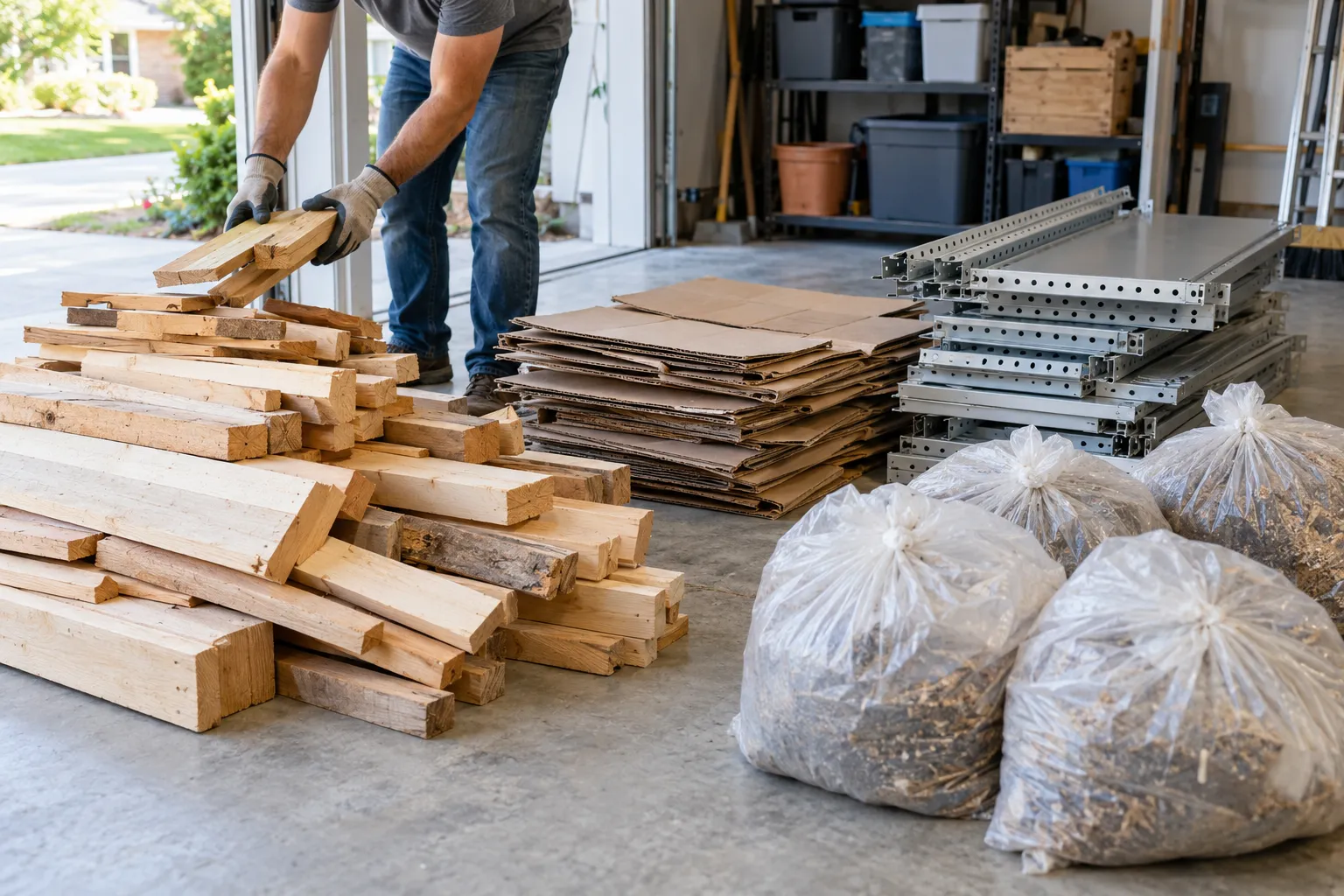
Separate debris by material before it is loaded. Clean wood, metal, cardboard, and bagged sweepings are easier to assess when they are not mixed with paint, chemicals, batteries, or unknown building material.
Build a small material inventory
Stop when the material is uncertain
Older coatings, insulation, flooring, and dust can require testing or specialized handling. Do not label material safe based on appearance. Paint, solvents, fuels, and other household hazardous waste need their own route, and the EPA advises against mixing them.
Weight can matter more than volume
A short stack of tile, concrete, or dense lumber can weigh more than a large group of empty boxes. Describe heavy material separately so the hauler can decide whether the load, equipment, and disposal path are suitable.
Keep the walking route clean
Bundle long pieces, contain small scraps, and keep sharp edges out of the path. Do not create unstable towers to make the pile look smaller. The goal is a load that can be evaluated and moved without hidden hazards.
City programs around Knoxville often separate construction material from ordinary bulky household waste. A private debris pickup should still identify the material before accepting it.
Sources and next steps
Material-handling guidance was checked against the U.S. EPA household hazardous waste guidance, EPA appliance disposal guidance, and applicable municipal pages linked from the service-area directory.
For help with the physical removal, review garage debris removal or prepare the details for an on-site estimate.